

Acne scars can be one of the most stubborn and frustrating skin concerns to deal with, often leaving behind marks that just won’t seem to fade. While there are many treatments available, few are as effective as microneedling when it comes to targeting and improving the appearance of acne scars. As someone who’s seen countless clients transform their skin through microneedling, I can tell you that this treatment isn’t just about surface-level changes—it goes deeper to stimulate collagen and promote healing from within. In this post, I’m diving into the powerful benefits of microneedling for acne scars, how it works, and why it’s one of the most trusted treatments for achieving smoother, clearer skin. If you’re ready to see real, lasting improvements, let’s explore how microneedling can help you tackle those scars once and for all.
- Key Takeaways
- The Science of Skin Renewal
- Key Benefits of Microneedling for Acne Scars
- Your Treatment Journey
- Professional vs. At-Home Devices
- Optimizing Your Results
- Is This Right For You?
- Conclusion
- Frequently Asked Questions
Key Takeaways
- Microneedling triggers regimented wound healing in the epidermis and dermis, which causes fibroblasts to secrete collagen I, collagen III, and elastin for more supple, firmer skin. This dermal remodeling minimizes atrophic acne scars at different depths and skin types with limited downtime.
- The visible effects occur on a timeline beginning with temporary redness and swelling, then texture and tone evening, and finally long-term scar softening over months. There is cumulative improvement with repeated sessions as new collagen matures and reorganizes.
- Repeated treatments even out pitted scars, reduce post-inflammatory hyperpigmentation, tighten large pores and fortify your skin barrier for enhanced resilience. Enhanced microchannel formation delivers targeted topicals like retinoids, vitamin C and hyaluronic acid deeper, increasing their efficacy.
- Professional microneedling provides a more in-depth, safer, and more precise treatment than at-home devices because of its adjustable needle depth, single-use sterile needles, and clinician-guided technique. Clinical protocols customize depths and passes for boxcar, rolling, and ice pick scars while limiting side effects.
- A regimented care routine enhances results from pre-treatment prep and numbing cream to sterile procedure and rigorous post-care featuring mild washing, sun protection, and hydrating serums. Avoid makeup and irritants for 24 to 48 hours and emphasize broad spectrum SPF to minimize pigmentation risk.
- Maximize results with a scheduled series, combining therapies when appropriate such as subcision or radiofrequency microneedling for tethered or severe scars, and support healing with adequate sleep, balanced nutrition, hydration, and no smoking. Monitor improvement through photographs and reduce frequency according to clinical response.
Advantages of microneedling for acne scars encompass enhanced skin texture, diminished depth of atrophic scars, and a more uniform complexion due to precision collagen stimulation.
With fine needles ranging from 0.5 to 2.5 mm, it creates micro-channels that induce wound healing, increase collagen I and III, and promote elastin remodeling.
Results accumulate over three to six treatments, spaced four to six weeks apart, with little downtime and minimal risk for the majority of skin types.
Pairing with PRF or topical peptides can increase gains.
The following sections cover protocols, safety, and results.
The Science of Skin Renewal
Microneedling, a popular cosmetic treatment, repairs acne scars by leveraging micro-injuries to initiate a controlled healing response in the epidermis and dermis. The epidermis remains intact as channels extend into the dermis, stimulating collagen and elastin regeneration for even skin texture.
The Healing Cascade
Healing follows three linked phases: inflammation, proliferation, and remodeling. Fine needles puncture consistent channels, usually between 0.5 and 2.5 mm, determined by equipment and scar depth. This process stimulates platelets to secrete growth factors.
These cues mobilize fibroblasts, increase capillary blood flow, and initiate matrix repair without ablating the epidermis. During the proliferation phase, fibroblasts deposit provisional collagen, primarily type III. Endothelial cells generate new capillaries and keratinocytes resurface the micro-channels.
Over weeks, remodeling tilts the matrix toward robust type I collagen, rearranges fibers and clears away chaotic scar bundles that create indented shadows. Texture change often tracks a practical timeline: day 1 to 3 shows erythema and mild edema, day 4 to 7 presents a smoother feel and reduced roughness, weeks 3 to 8 indicate early scar softening, and months 2 to 6 involve ongoing remodeling with visible lift of atrophic edges.
Most require several treatments spaced 4 to 6 weeks apart. Side effects are generally modest, including redness, tightness, and dryness, and they subside within a few days with appropriate maintenance.
Collagen Induction
Microneedling induces collagen types I and III and elastin stimulation, which are at the heart of filling in atrophic acne scars such as boxcar and rolling scars. With more new matrix, the dermis thickens and holds up the epidermis, so indentations appear less deep and edges blend more seamlessly with surrounding skin.
Faster collagen turnover lifts the ‘floor’ of a depressed scar and smooths the transition zone. Multiple visits provide compounding benefits as remodeling persists for months, with each session laying down new aligned fibers and trimming away old scar tissue.
Contemporary tools, such as manual rollers, robotic pens, and radiofrequency microneedling, allow doctors to customize depth and energy to scar variety and complexion, which enhances results and security.
Cellular Remodeling
Keratinocytes in the epidermis and fibroblasts in the dermis respond to micro-injury by increasing turnover, re-laying extracellular matrix, and enhancing the skin’s scaffold. This contributes to an even skin tone by promoting faster shedding of pigmented cells and better pigment dispersion, which is particularly helpful for post-inflammatory hyperpigmentation often seen after acne. Advanced acne scar treatments can further improve skin texture and appearance.
Old, inflexible collagen bundles degrade and are subsequently replaced with healthier, more elastic tissue that refracts light more uniformly. Over time, the epidermis, dermis, and even the interface with subcutaneous tissue all work more in sync, bolstering barrier function and resilience against future breakouts, which is essential for effective scar treatment.
While microneedling treatment is well established in aesthetic medicine with decades of refinement, including automated pens, radiofrequency devices, and combo therapies, results depend on technique and aftercare. Expert dermatologists often emphasize the importance of a personalized treatment plan.
Avoid direct sun exposure, use broad-spectrum sunscreen, and keep the skin hydrated with gentle moisturizers to support steady repair and stable collagen, which is crucial for the healing process.
Key Benefits of Microneedling for Acne Scars
Microneedling, a popular cosmetic treatment, creates minute, precise punctures to stimulate collagen remodeling and skin renewal without damaging healthy tissue. This minimally invasive procedure generally takes about 30 minutes and is effective for various types of scarring, including atrophic scars. With a fast recovery and mild redness lasting one to three days, it is safe for a broad range of skin tones.
- Reduces depth and visibility of atrophic scars
- Fades post-acne discoloration and redness
- Refines enlarged pores and limits congestion
- Enhances penetration of targeted topicals
- Strengthens barrier function and moisture balance
- Minimal downtime versus ablative lasers; versatile for diverse complexions
- Gradual, long-term gains with ongoing collagen remodeling
1. Smoothes Texture
By generating controlled micro-injury, microneedling induces type I and III collagen and elastin around depressed scar walls, simultaneously lifting rolling and boxcar scars towards the surface. This collagen remodeling extends for months, so texture keeps getting better in the interim between sessions. Many patients observe peak transformation at six to twelve months.
It smooths rough patches and diminishes lumpy bumps left by old lesions. Skin feels less rough and foundation or tinted SPF slides on with fewer skips and less settling into craters. Patients frequently notice more even light reflection, which translates to smoother skin on camera and in daylight.
With your texture more even, everyday confidence increases in a calm, realistic manner.
2. Fades Discoloration
Microneedling speeds keratinocyte turnover, which clears post-inflammatory hyperpigmentation and residual red marks by accelerating pigment breakdown and removal via normal desquamation. Over time, you won’t need to pile on heavy concealers and color correctors.
Regular maintenance addresses both brown macules and lingering redness. Pairing with vitamin C or tranexamic acid post-treatment can support a brighter, more uniform tone.
3. Refines Pores
Collagen induction densifies the dermal matrix surrounding pore ostia, so pore areolae look smaller. This structural support can diminish blackheads and whiteheads by supporting the follicular opening and reducing debris retention.
Oiliness usually falls a notch in breakout-prone areas, slashing mid-day shine. Smaller-looking pores appear smoother and more youthful in various lights.
4. Boosts Product Efficacy
Microchannels formed during treatment increase short-term permeability, which enhances the uptake of serums and topical creams. Use targeted actives right after hydrating hyaluronic acid, brightening vitamin C, and after the barrier settles, retinoids for ongoing scar remodeling.
Maintain a curated list by concern: pigment (vitamin C, tranexamic acid), texture (retinoids, peptides), hydration (HA, ceramides). PRP can be added in clinic to boost results.
5. Strengthens Skin Barrier
As new stratum corneum is generated, barrier function is restored and symptom flares of sensitivity lessen over time. Strong barrier integrity helps protect against pollution and UV-induced stress, which can cause new breakouts and pigment.
Increased moisture retention means dryness and flaking subside. With a stronger barrier, upkeep sessions every 6 to 12 months maintain improvements.
There is marked improvement in the appearance of scars and very little downtime. Most people resume work the following day. Combination therapy, such as PRP, may enhance outcomes even more, with full results accumulating over a year.
Your Treatment Journey
Micro needling acne scars works best when you geek it out and keep up with your progress. From consultation to preparation, treatment, and aftercare, your treatment journey is important. A personalized plan matters because scar types—icepick, boxcar, rolling—respond to different needle depths and passes.
Experienced clinicians lead settings and safety, and progress photos and standardized scoring keep results objective.
Before Your Session
- Schedule and timing: Plan treatments four to six weeks apart, usually three to six sessions for mild to moderate scarring. Schedule with life events in mind as redness and mild swelling persist for a few days.
- Medication and skin history: Share active prescriptions, past isotretinoin use, herpes simplex history, keloid tendency, and pigment changes after injuries. Remember allergies and pregnancy.
- Products to pause: stop retinoids, exfoliating acids, benzoyl peroxide, and harsh scrubs 3 to 5 days before. No tanning, waxing, or at-home microneedling for 1 week.
- Day-of prep: Arrive with clean, makeup-free skin. Ditch the thick creams, SPF, and hair removal. Drink a lot of water, eat something light, and bring a question list.
Bring current skincare products, devices used at home, and previous procedures. Inquire about microneedling treatment needle depth by zone, expected downtime for your skin type, and how results will be graded using VSS, GAIS, and self-assessment surveys.
During The Procedure
A topical anesthetic is left to sit for 20 to 30 minutes to numb the area. Most experience tingling or light stinging, which is more intense over bones.
Sterile, disposable needles form regulated micro-channels over scars and adjacent skin. Clinicians randomize passes and patterns to disrupt fibrotic strands and stimulate collagen.
Session time spans 30 to 60 minutes depending on area size, scar burden, and skin sensitivity. Expertise guides depth of 0.5 to 0.8 mm for tone and fine texture, 1.0 to 1.5 mm for rolling or shallow boxcar scars, and up to 1.5 to 2.0 mm in thicker dermis.
Energy-assisted devices or PRF can be paired when indicated. Treatment establishes a baseline for tracking with photos and GAIS scoring.
After Your Session
Wash with a mild, pH-balanced cleanser and warm water. Soothe with a simple occlusive or peptide serum.
AVOID direct sun, hot workouts, sauna, and swimming for 24 to 48 hours. Anticipate mild erythema, pinpoint bleeding, or swelling for 1 to 3 days, with temporary bruising possible.
Ditch makeup, retinoids, acids, scrubs, and alcohol-based toners for 24 to 48 hours. Resume actives gradually as the pinkness dissipates.
Use broad spectrum SPF 50+ every day, reapply frequently and apply hydrating serums with hyaluronic acid. Results may begin to improve within weeks and early texture changes frequently occur at one month.
Collagen remodeling continues for months, with incremental improvements and peak results over several months. After six appointments, research states roughly 51 to 60 percent scar reduction and 40 to 50 percent texture improvements.
Track your treatment with baseline and periodic follow-up photos and VSS or GAIS scores and self-surveys to capture change.
Professional vs. At-Home Devices
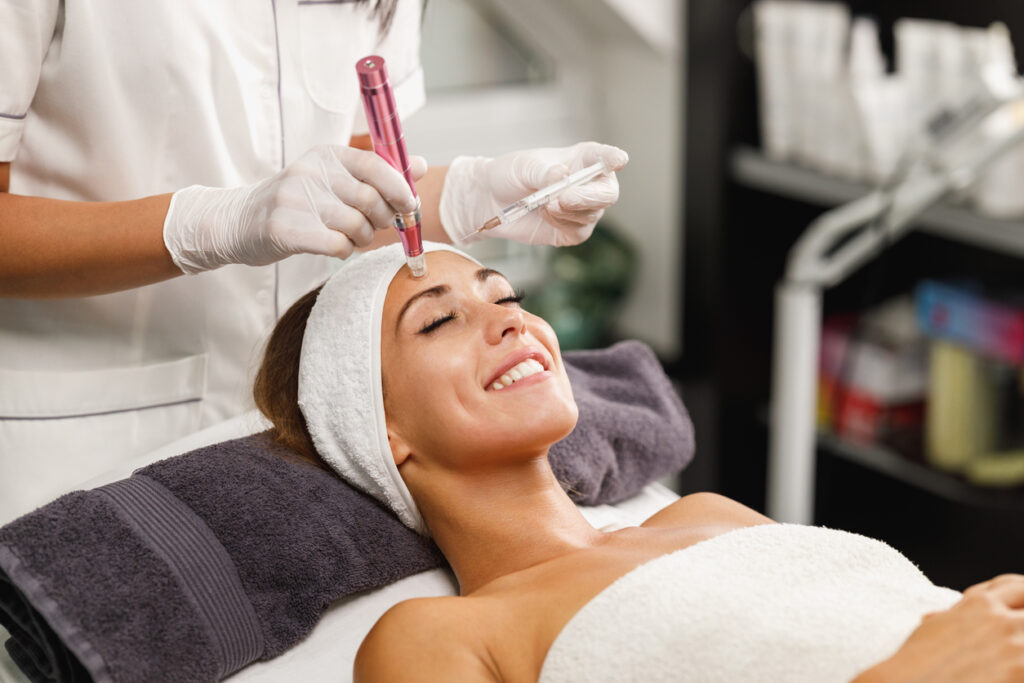
Both methods generate precise micro-injury to stimulate collagen. The difference in depth control, sterility, technique, and results is huge, particularly for acne scars that are nestled in the dermis.
Factor | Professional Microneedling | At-Home Devices |
|---|---|---|
Needle range | 0.5–2.5 mm; adjustable per site | 0.25–0.5 mm; fixed or limited |
Best for | Acne scars, deep wrinkles, hyperpigmentation | Surface texture, tone, product absorption |
Benefits | Collagen remodeling, longer-lasting | Temporary, mostly superficial |
Safety | Medical-grade sterility, single-use needles | Greater infection/trauma risk |
Downtime | 24–48 hours average | Hours, slight redness |
Session cost | $100–$700 | $15–$140 device |
Customization | Protocols per scar type, combinations (PRF, RF, laser) | Limited settings, no adjuncts |
Professionally vs. at-home | Done by professional clinician | Done by self, higher technique error |
Professional procedures insert safety checks, screening for keloids, active acne, or photosensitivity, and employ aseptic setup to reduce infection risk. DIY use increases the chances of incorrect pressure, drag, and contamination.
Clinic care provides the ability for true customization for boxcar, rolling, and icepick scars, even combining energy devices or PRF when indicated.
Needle Depth
Professional pens dive into the reticular dermis when called upon, the home of fibrotic tethering and atrophic defects. This depth is crucial for true remodeling and for breaking up scar bands in a controlled manner.
Home rollers max out at 0.25 to 0.5 millimeters, which assists brightness and serum absorption but cannot address deep texture. Depth selection is important according to scar type, skin thickness, and tolerance.
Over- or under-penetration shifts risk and even shrinks returns, so accurate mapping by zone is key.
Scar Type | Typical Depth Range (mm) |
|---|---|
Icepick | 1.5–2.0 (often combined with TCA CROSS) |
Boxcar (shallow/moderate) | 1.0–1.5 |
Rolling | 1.5–2.0 (plus subcision when tethered) |
Post-inflammatory hyperpigmentation with texture | 0.5–1.0 |
Thin periocular skin | 0.25–0.5 |
Sterilization
Clinics follow strict sterilization procedures, including single-use, medical-grade needle cartridges, skin prep with antiseptic, barrier protection, and device disinfection protocols between patients. These reduce cross-contamination and biofilm risks.
At home, real asepsis is tough. Alcohol dips and quick rinses don’t sterilize. Reusing rollers dulls needles, rips, and increases infection risk. Never share devices or reuse needles.
Technique
Professional vs. At-Home Devices trained clinicians control angle, speed, pass count, and tracking so needles enter vertically and lift cleanly, avoiding shear that worsens scarring. They differ passes by zone, with higher density over boxcars and lighter over thin areas, and couple depths with scar patterns for consistent neocollagenesis and reduced downtime.
Non-experts frequently press unevenly, overwork a patch, or skip edges, resulting in lines, petechiae or post-inflammatory hyperpigmentation. Expertise cuts side effects, directs spacing of four to six weeks and six to eight weeks for sensitive or dry skin, and smart adjuncts that amplify results.
At-home devices can increase serum absorption by two hundred percent, but the effects remain superficial.
Optimizing Your Results


Clear objectives, a treatment plan, and good habits make microneedling treatment more effective for acne scars. Results stem from controlled damage, collagen remodeling, and consistent post-care. Anticipate some mild erythema for a few days and cumulative transformation over weeks, leading to great results.
Treatment Frequency
Begin with three to six sessions, four to six weeks apart for the majority of atrophic scars. We can specifically address shallow rolling scars at 0.5 to 1.0 millimeters or deeper boxcar or mixed scars at 1.5 to 2.5 millimeters with devices that allow us to adjust needle depths, depending on skin thickness and tolerance.
Maintenance treatments are necessary. Plan one session every 6 to 12 months to sustain collagen gains and texture improvements, adjusting cadence to scar severity, skin of color considerations, and seasonal sun exposure.
Take care not to over-treat. Sessions that are too frequent may impede healing, increase the risk of post-inflammatory hyperpigmentation, or extend erythema. Listen to the experts, particularly after ablative lasers or peels.
Construct a regimen calendar. Schedule anticipated downtime, as visible redness can persist for one to three days. Include aftercare check reminders and mark milestones when clinical studies highlight early change, sometimes within weeks.
Combination Therapies
- Rolling scars: Microneedling and subcision add platelet-rich fibrin (PRF) to support neocollagenesis and reduce downtime.
- Boxcar scars: microneedling at deeper passes and fractional laser or medium-depth chemical peel for edge softening.
- Ice-pick scars: focal TCA CROSS and microneedling. Think about staged sessions to cap irritation.
- Mixed scars with laxity: Radiofrequency microneedling for dermal tightening, then topical growth factors.
- Pigmented scars or skin of color: nanoneedling for gentle delivery of brightening actives, and SPF 50+ photoprotection.
- Post-inflammatory erythema: Microneedling and vascular laser in separate visits reduce redness.
Combination strategies tackle depth, width, tethering, and color change in a single strategy. Over the last 20 years, automated pens, RF microneedling, and blended protocols increased effectiveness, while adjustable needle depths enable per-site customization.
For extreme or tethered scars, subcision or RF microneedling provides mechanical release and controlled thermal coagulation. Nanoneedling can help maintain pigment control and fine-texture improvements with less downtime on sensitive skin.
Lifestyle Factors
Nutrition, hydration, and sleep fuel collagen production. Strive for consistent protein intake, vitamin C, and zinc from whole foods and two to three liters of water per day as an easy goal.
Skip smoking and keep alcohol low. Nicotine and ethanol inhibit fibroblast activity and microcirculation, delaying remodeling and increasing the risk of dyschromia.
Keep skincare simple: gentle cleanser, non-acidic moisturizer, broad-spectrum SPF 50+, and avoid retinoids, AHAs, or scrubs for 3 to 5 days post-session. Re-introduce actives gradually once the barrier heals.
Manage stress with repeatable habits, such as brief exercise, breath work, or short walks, to blunt cortisol spikes that can delay repair. Track progress with self-assessment questionnaires and standardized scores like VSS or GAIS. Adjust depth, interval, or add modalities when scores plateau.
Is This Right For You?
Microneedling for acne scars is an excellent option for many adults looking for consistent, natural transformation without downtime. The primary goal is to remodel collagen in a controlled manner, rather than simply wiping away scars overnight. The selection of this treatment is based on the scar pattern, skin tone, health, and the patient’s willingness to adhere to a comprehensive treatment plan.
Begin with your scar type. Rolling and shallow boxcar scars respond best since needles can both disrupt fibrotic strands and stimulate neocollagenesis. Icepick scars can require adjuncts like chemical reconstruction with TCA CROSS or focal energy devices. Hypertrophic or keloid-prone skin demands care. Microneedling can inflame or exacerbate raised scars.
Map the scars by location and depth. Mixed patterns generally require a staged approach. Skin tone counts. Microneedling tends to be safe across the majority of skin types since it keeps heat relatively low and preserves the epidermis, but PIH risk is always present, especially with darker tones.
Use mild formulations, high sun protection measures, and pigment-safe topicals. Steer clear of active acne, eczema flares, psoriasis plaques, open wounds, or recent infections. Defer if you took isotretinoin in the last 6 to 12 months, have unstable autoimmune disease, impaired healing, or a bleeding disorder.
Anticipate a schedule, not a silver bullet. Collagen remodeling is a slow biological process. Most see slight texture improvements within the first month as edema subsides and turnover enhances. Best alterations reflect in posed pictures at 3 to 6 months.
Complete results can take as long as a year as the new collagen arranges itself. Most mild to moderate scarring requires 3 to 6 sessions, 4 to 6 weeks apart, with some needing up to 12. Count on six weeks between sessions when using deeper passes to allow collagen to mature. The results can be long-lasting, but annual upkeep is logical as collagen decreases with age.
Side effects are generally brief. Anticipate temporary redness, mild swelling, and minor bruising for 1 to 3 days. They fade with cold compresses, fragrance-free emollients, and rigid UV protection. Hydrate by drinking plenty of water before and during treatment to reduce bruising and inflammation.
Pause retinoids and acids 3 to 5 days prior to and after treatment. Steer clear of gyms, saunas, pools, and makeup for 24 hours. Use this candidacy checklist: stable, non-inflamed acne; scars mainly rolling or shallow boxcar; realistic goals with patience for months; healthy healing, no keloid history; consistent sun care; ability to commit to three to six sessions and possible maintenance; comfort with minor downtime and aftercare; willingness to pair with adjuncts if icepick or deeper scars are present.
Conclusion
Microneedling causes acne scars to fade in significant, consistent increments. Tiny needles induce precise damage. Fibroblasts deposit new collagen and elastin. Pores appear reduced in size. Texture appears smoother. Tone appears more even. Results accumulate with every treatment.
Stack wise actions to secure momentum. Space sessions four to six weeks apart. Apply SPF 30. Maintain skin clean and calm. Pair with PRF for stronger collagen lift. Spritz on a light, unscented serum with hyaluronic acid for barrier reinforcement. Skip actives for a few days.
We map scar types, depth and pattern in our clinic. We establish needle depth according to zone. We monitor wound healing phases. We measure the difference with photos and skin scope.
Ready to schedule your series? Schedule a consultation at Physician Aesthetic Institute.
Frequently Asked Questions
How does microneedling improve acne scars?
Microneedling, a popular cosmetic treatment, causes micro-injuries that initiate collagen and elastin formation, effectively improving skin texture and tone. This remodeling softens atrophic acne scars, with clinical research supporting its efficacy for moderate acne scars over multiple sessions.
How many sessions do I need to see results?
Most folks notice visible improvement after three to six sessions of advanced acne scar treatments, each spaced four to six weeks apart. Deeper or older scars might require additional sessions, while maintenance sessions every six to twelve months can help maintain results.
Is microneedling safe for all skin tones?
Indeed, when performed by expert dermatologists, microneedling treatment carries minimal risk of pigment changes compared to certain laser treatments. Pre-and post-care, along with proper settings, are essential. Always consult a licensed provider experienced in addressing diverse skin concerns for optimal results.
What is the downtime and side effects?
Anticipate redness and slight swelling for 24 to 72 hours after the cosmetic treatments. Some dryness, tightness, or flaking might take place, but most people are back to work within a day, especially when following the right treatment plan.
Can microneedling be combined with other treatments?
Yes, it complements PRP, topical growth factors, vitamin C, and light chemical peels. Combination treatments, including advanced acne scar treatments, can enhance collagen and accelerate results. Your provider will customize a secure treatment plan specific to your skin and scar type.
Are at-home microneedling devices effective?
Home rollers do almost nothing for texture and are ineffective for acne scars. Professional, medical-grade devices used in cosmetic dermatology reach exact depths, providing more uniform and safer results.
Who should avoid microneedling?
Avoid these treatments if you have active acne, infection, or keloid tendency, and ensure to consult expert dermatologists for a professional assessment, especially if you’re prone to skin concerns like post-inflammatory hyperpigmentation.